



Integrate IAMMETER Energy Meters into Self-Hosted and Open-Source Systems
Integrate IAMMETER Wi-Fi Energy Meters with Home Assistant, Node-RED, and Open-Source Platforms
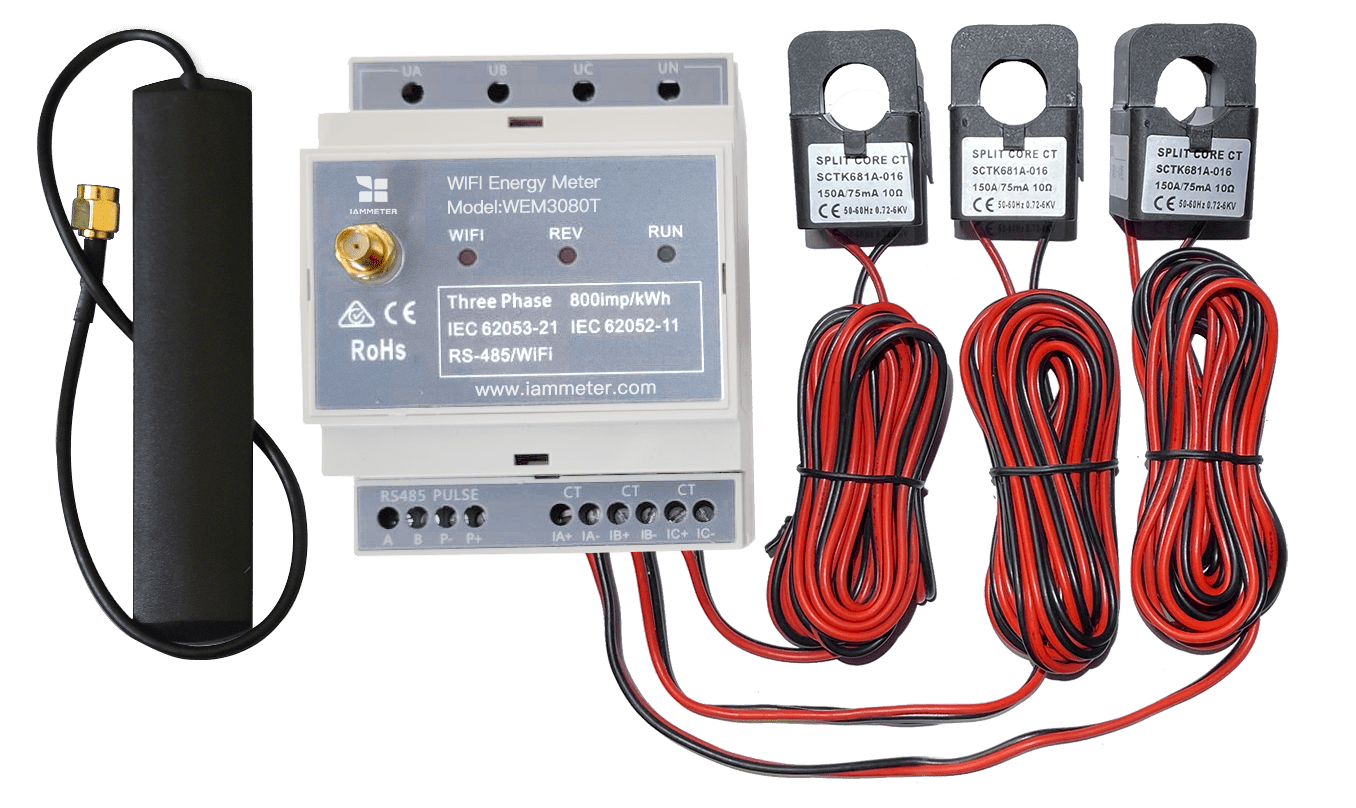
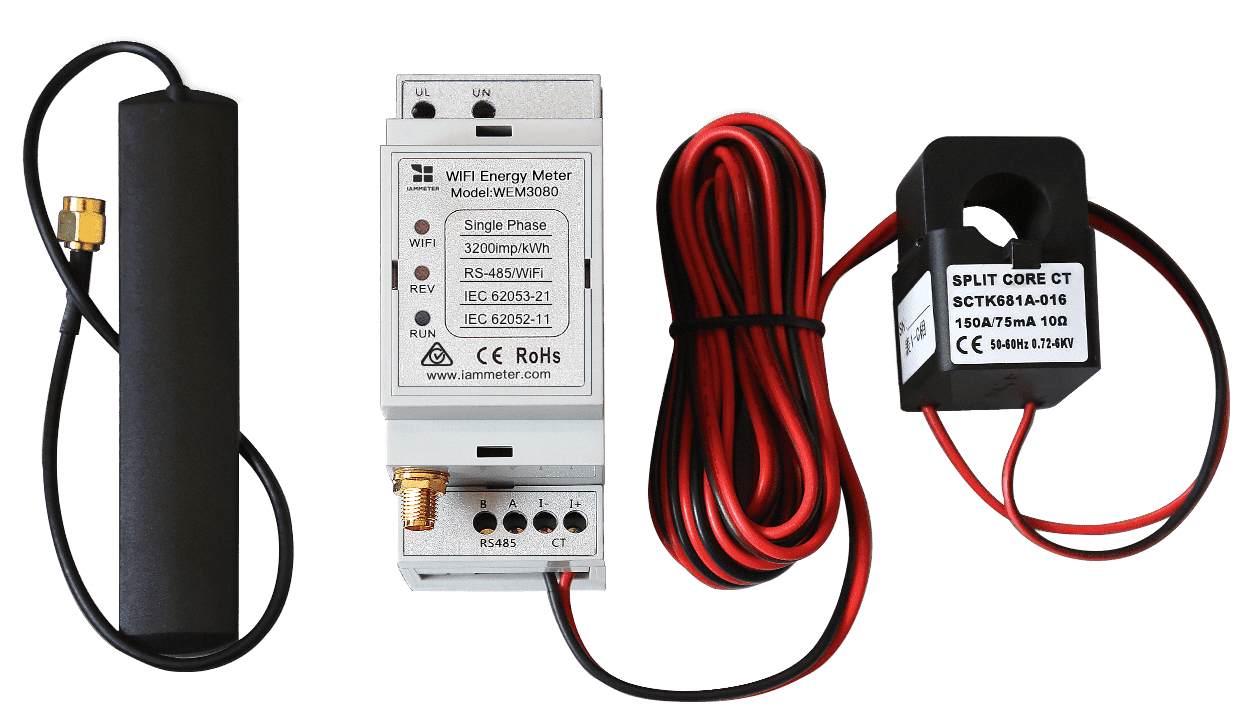
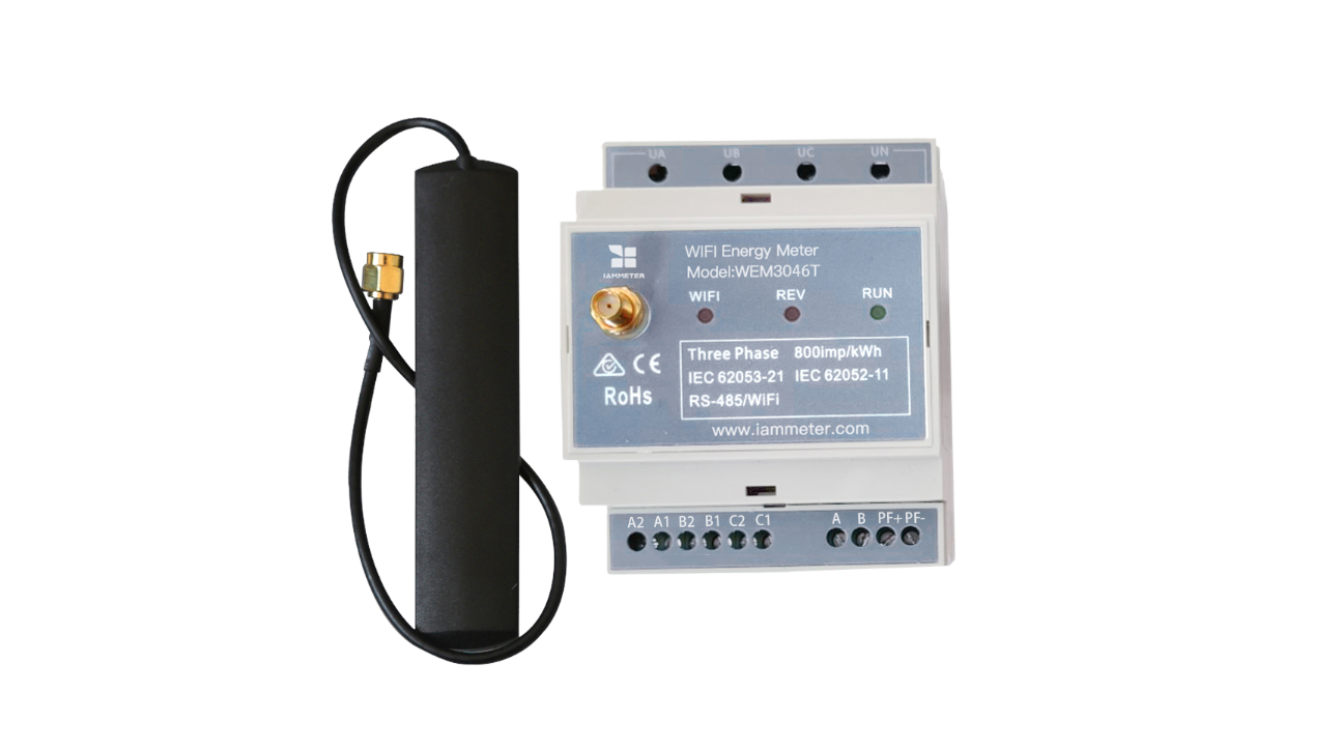
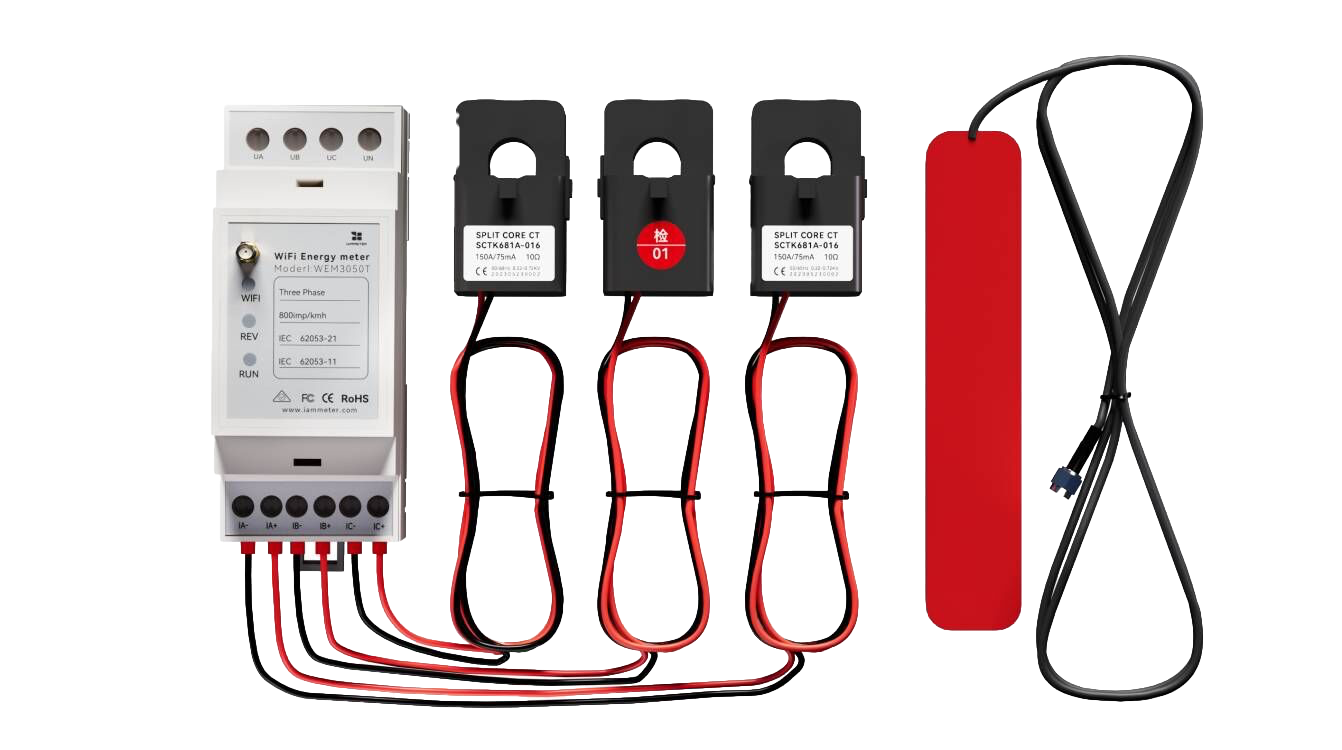
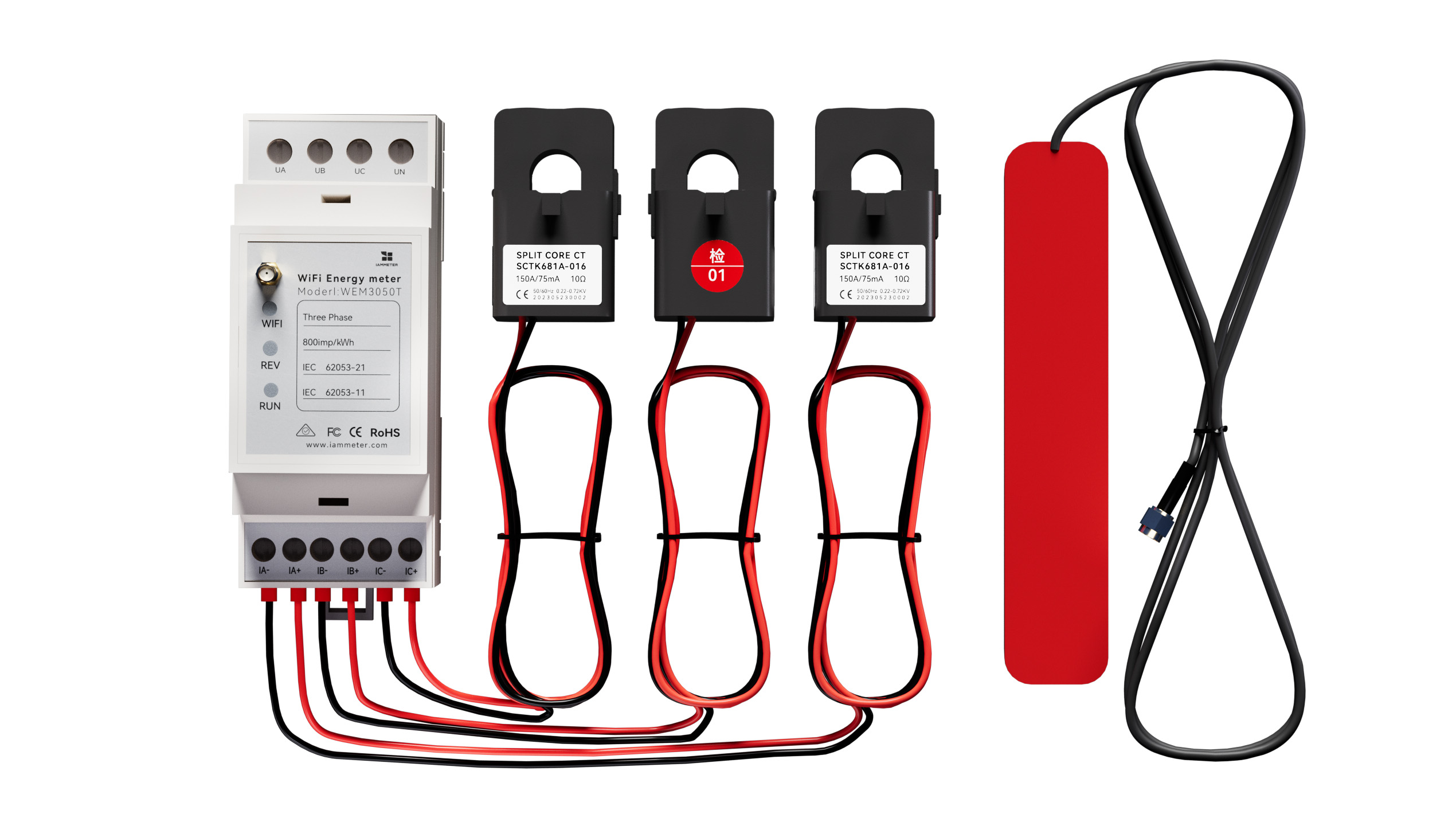
IAMMETER provides a series of Wi-Fi energy meters — including WEM3050T, WEM3080T, and WEM3046T.
All models share the same open communication architecture and integration capabilities, supporting local and self-hosted energy management systems.
This guide focuses on integrating IAMMETER meters into Home Assistant, Node-RED, OpenHAB, ioBroker, ThingsBoard, Zabbix, and other open-source or locally deployed platforms — including IAMMETER-Docker and IAMMETER-Central — without relying on IAMMETER-Cloud.
🔎 Looking for a complete solution that uses these open interfaces?
IAMMETER’s local and self-hosted integration capabilities can support:
👉 Home Energy Monitoring
👉 Solar Energy Monitoring
👉 Energy Cost Optimization
1. Product Overview
IAMMETER’s Wi-Fi energy meters are designed for both local and cloud-based monitoring applications.
They provide open APIs and multiple communication interfaces such as Modbus/TCP, MQTT, HTTP/HTTPS, and RESTful API, enabling integration with nearly any energy monitoring or home automation platform.
🧩 Each IAMMETER meter supports direct data upload to your own server or third-party software, and can also operate entirely offline for LAN-based systems.
This makes IAMMETER a practical choice for users who want to:
- build their own dashboards
- automate devices based on energy data
- keep all data locally
- integrate metering into custom EMS / BMS / ERP systems
2. Why Local and Open Integration Matters
Not every user wants a cloud-only monitoring experience.
Many developers, integrators, and advanced users need:
- local data access
- full control over storage and analytics
- direct integration with Home Assistant or open-source tools
- automation based on real-time power, solar, or tariff conditions
With IAMMETER, these use cases are supported natively through open interfaces.
This means IAMMETER can be used not only for monitoring, but also for:
- smart home energy management
- solar self-consumption control
- electricity cost optimization
- enterprise or industrial integrations
💡 If your goal is to turn local energy data into practical results,
you may also want to explore:
👉 Energy Cost Optimization
3. Integration Platforms
🏠 Home Assistant
IAMMETER meters integrate with Home Assistant in four ways:
| No. | Integration Method | Interface | Refresh Rate |
|---|---|---|---|
| 1 | Core Integration | HTTP | 1 min |
| 2 | Modbus/TCP Sensor | Modbus/TCP | 1 s |
| 3 | MQTT Sensor | MQTT | 12 s |
| 4 | HACS Integration | HTTP / Modbus/TCP | 1 min / 1 s |
📘 Resources:
- Integrate IAMMETER with Home Assistant
- Summary: Using IAMMETER in Home Assistant
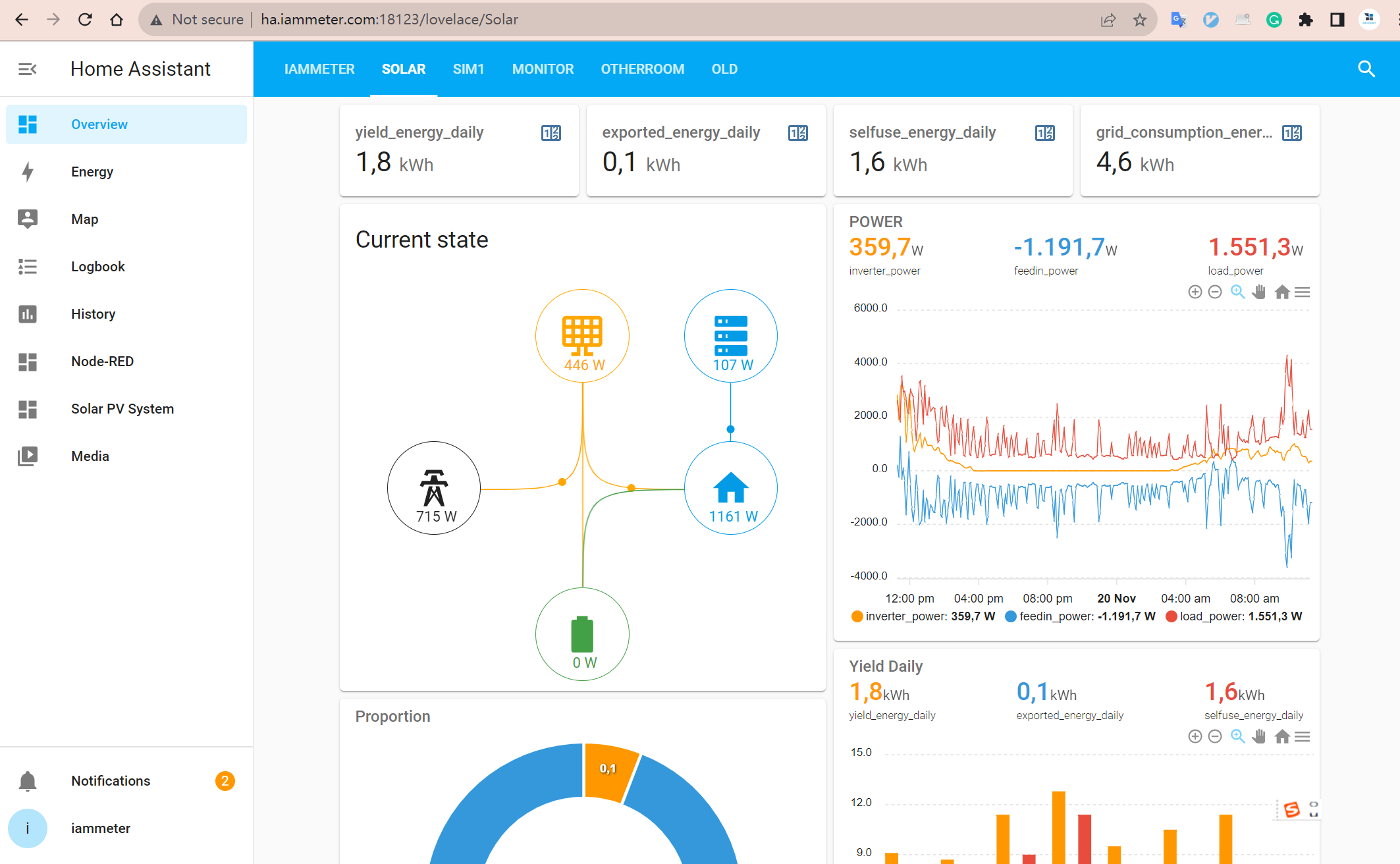
- Monitor Your Solar PV System in Home Assistant
🔄 Node-RED
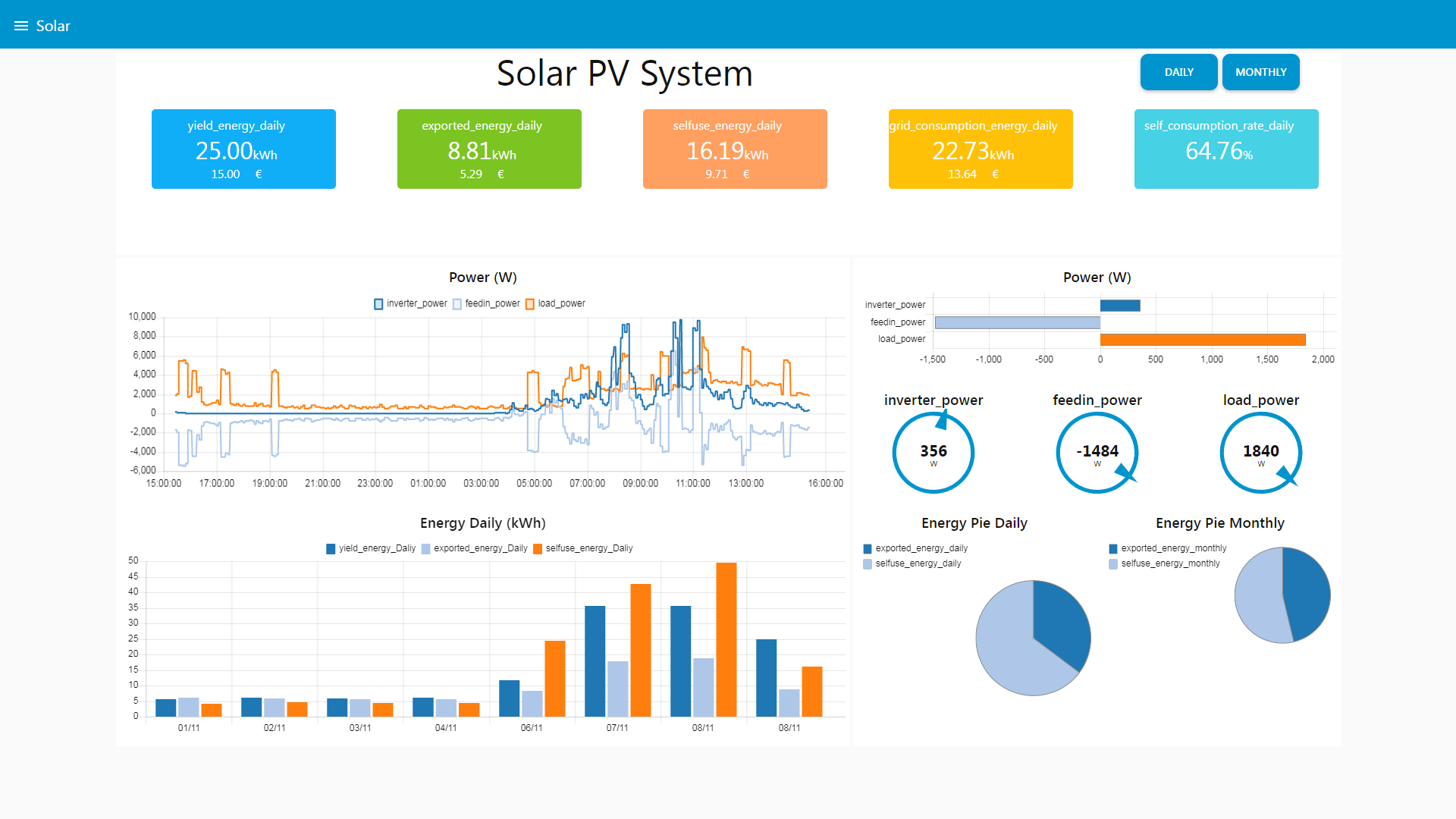
Node-RED users can visualize, process, or automate IAMMETER data through MQTT or HTTP nodes.
📘 Resources:
💡 OpenHAB / ioBroker / Zabbix / ThingsBoard
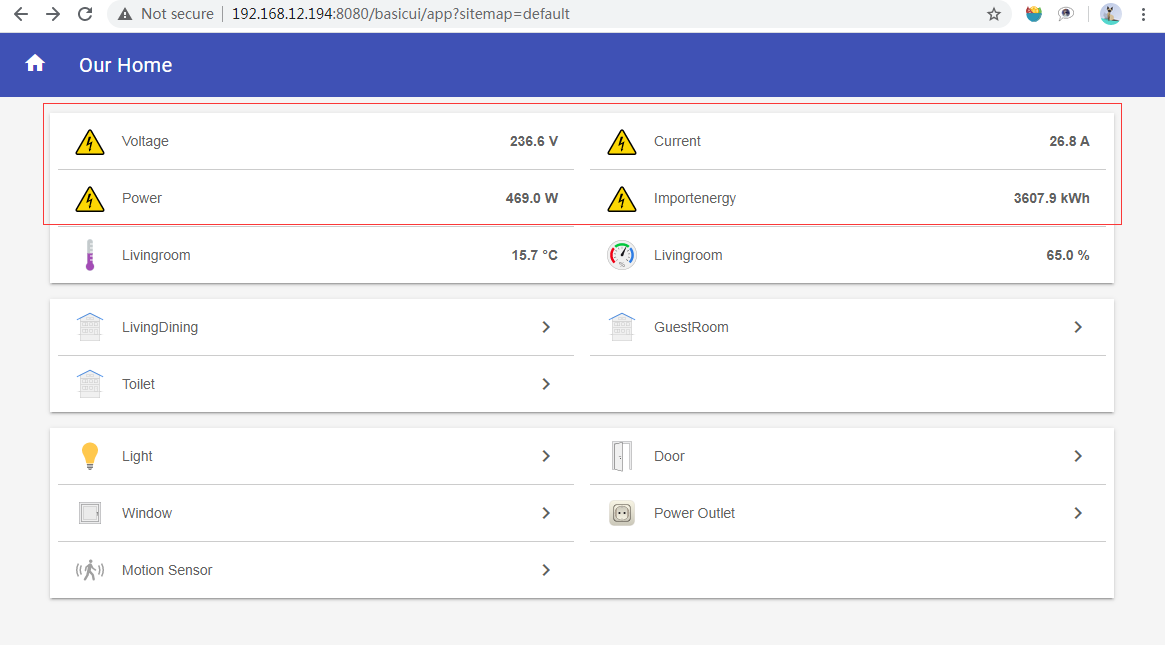
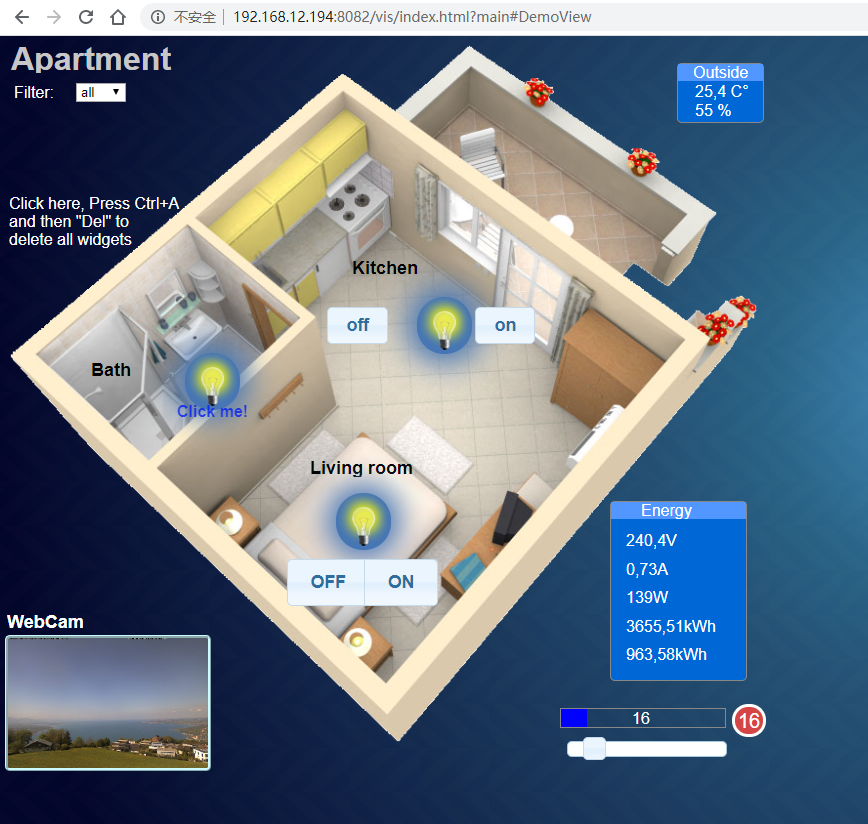
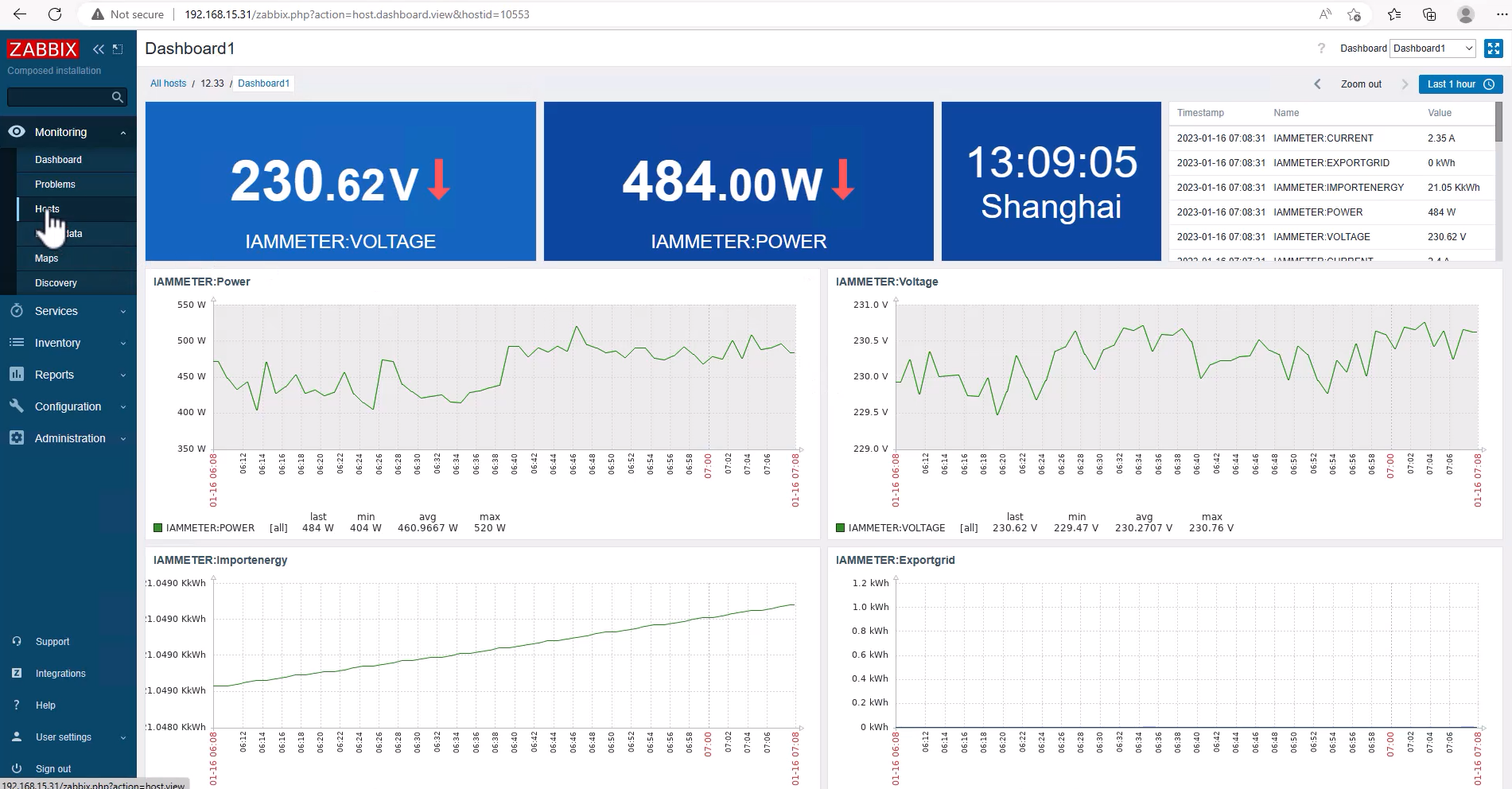
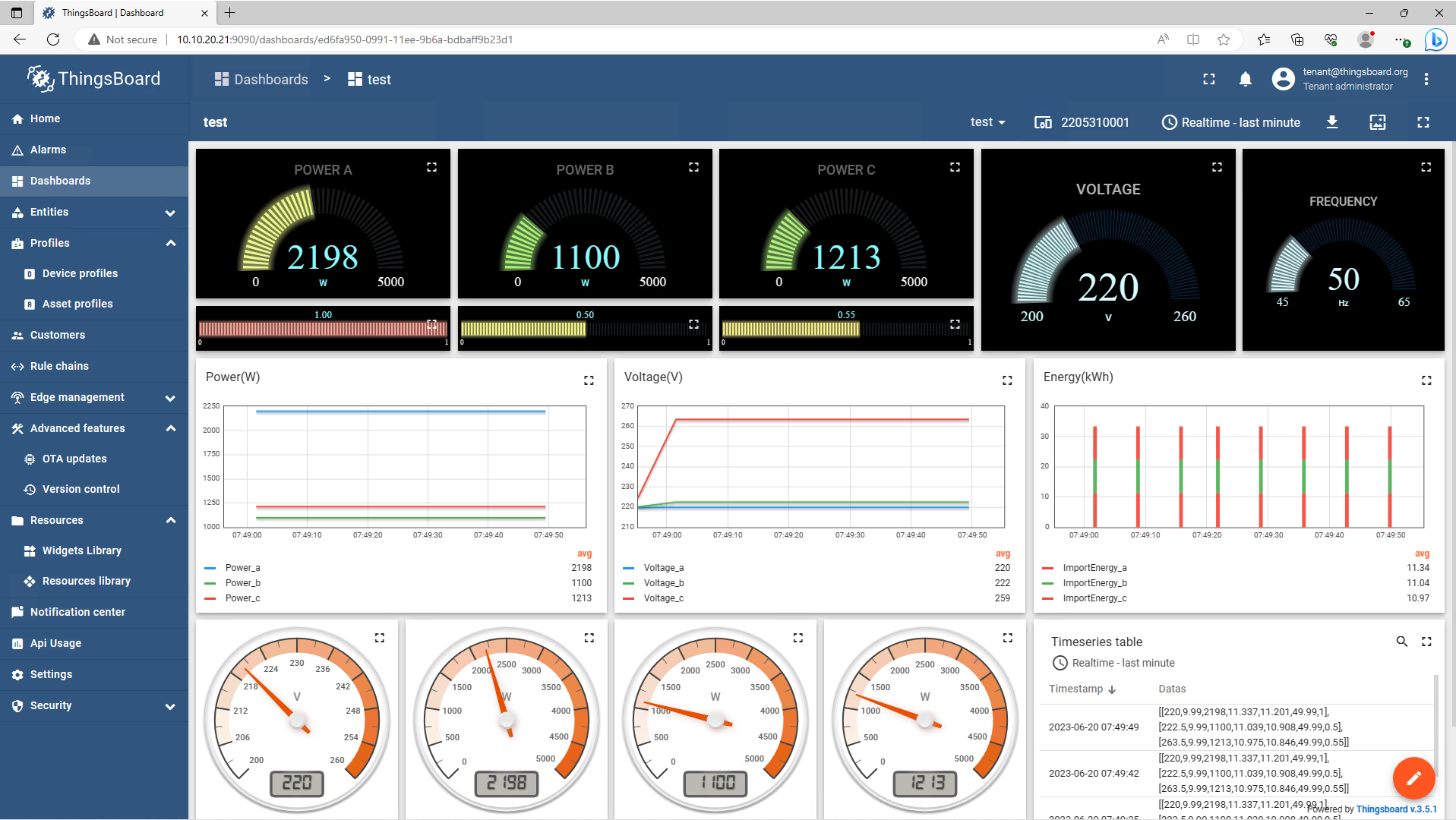
IAMMETER meters can be connected to various open-source monitoring tools such as OpenHAB, ioBroker, Zabbix, and ThingsBoard, using their built-in APIs or MQTT/HTTP upload options.
🐋 IAMMETER-Docker
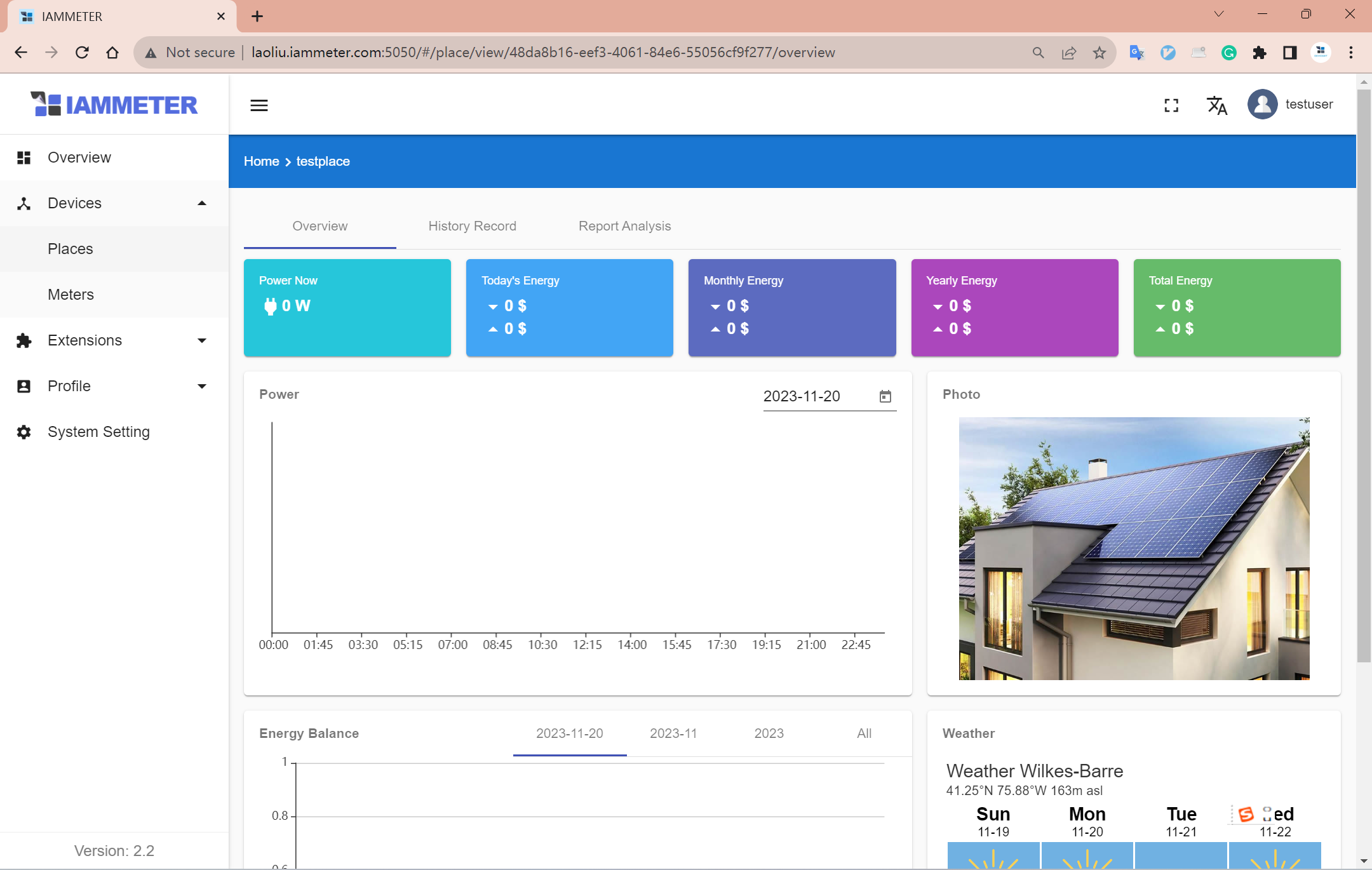
IAMMETER-Docker is an open-source energy monitoring system developed by IAMMETER.
It can be deployed on your own server (for example, Raspberry Pi) and functions as an API server for custom UI or data analytics.
Even if you don’t own IAMMETER hardware, you can still use IAMMETER-Docker to monitor PV systems or energy usage.
📘 Guide: Add IAMMETER Meter to Docker
🏢 IAMMETER-Central
IAMMETER-Central is an enterprise-level middleware system developed by IAMMETER for users who want to manage their energy data in-house.
Key Features
- 🧩 Acts as a data middleware, not a full analytics system
- ⚙️ Handles storage and management of raw meter data — voltage, current, power, and energy
- 🔗 Provides a comprehensive RESTful API layer for ERP / EMS / BMS integration
- 🗄️ Supports MySQL and MariaDB databases
- 🔐 Only IAMMETER product SNs (including Virtual Meters) can be registered
- 💡 Recommended for enterprise-level integration between IAMMETER meters and corporate systems
Why use IAMMETER-Central
While IAMMETER meters can upload data directly to customer servers via standard protocols (TCP, MQTT, HTTP),
IAMMETER-Central simplifies integration — customers can call Central’s REST APIs instead of coding data parsing logic from scratch.
This approach is both faster and more reliable for production environments.
For installation and usage details, please visit the IAMMETER-Central official guide.

4. Open Data Interfaces
All IAMMETER Wi-Fi energy meters share the same open interface system.
They can either push data to third-party servers or respond to local API requests on the same LAN.
| Interface | Description | Protocol | Reference |
|---|---|---|---|
| Modbus/TCP | Real-time data (1s interval) for automation or SCADA | Modbus/TCP | Docs |
| MQTT | Publish energy data to any MQTT broker | MQTT | Docs |
| TCP/TLS | Push data securely to a remote server | TCP/TLS | Docs |
| HTTP/HTTPS | Send energy data via RESTful POST | HTTP/HTTPS | Docs |
| Local RESTful API | Retrieve real-time data directly via LAN | HTTP GET | Docs |
These open interfaces make IAMMETER meters ideal for developers building their own energy management systems, automation logic, or smart dashboards.
5. Typical Use Cases for Open Integration
IAMMETER’s local and open interfaces are especially useful for:
- Home Assistant dashboards and automations
- Solar monitoring without cloud dependency
- Local energy management on Raspberry Pi or NAS
- Enterprise middleware integration
- Smart load control and custom optimization logic
In other words, these integration capabilities are not just technical features — they are what make IAMMETER flexible enough to support different user goals.
👉 Related solutions:
6. Resources
- WEM3050T Product Page
- WEM3080T Product Page
- WEM3046T Product Page
- Integration with Home Assistant
- Node-RED Integration Guide
- Modbus/TCP Register Map
- Local API Overview
7. Summary
All IAMMETER Wi-Fi energy meters — including WEM3050T, WEM3080T, and WEM3046T — share identical data structures, protocols, and API formats.
This consistency ensures that any integration or automation developed for one model will work across the IAMMETER ecosystem.
This guide focuses on local and self-hosted integrations, which are ideal for users who want to:
- build their own dashboards
- automate based on energy data
- integrate IAMMETER into open-source platforms
- develop private or enterprise-grade monitoring systems
IAMMETER is not only a cloud-based monitoring platform.
It is also an open and developer-friendly energy metering ecosystem.
👉 Explore all IAMMETER solutions:
https://www.iammeter.com/solutions/
Last updated: March 19, 2026